Understanding the patterns that fuel addiction is crucial to making lasting changes in your recovery. The Recognizing Addictive Patterns and Changing Behaviors tool helps you identify the triggers, behaviors, and consequences that reinforce addiction, and then guides you toward replacing those behaviors with healthier alternatives. This exercise provides insight into the cycle of addiction and empowers you to break free by choosing more constructive actions.
By mapping out your triggers and behaviors, you’ll begin to see how certain situations lead to addictive actions and what consequences follow. With this clarity, you can then focus on replacing addictive behaviors with healthier ones that support your recovery and well-being.
Here’s how it works:
List your triggers: Start by identifying the situations, emotions, or people that trigger your addictive behaviors. Triggers could include stress, boredom, social pressure, or specific environments.
Describe your behaviors: Next, write down the behaviors you engage in when those triggers arise. What actions do you take when faced with these triggers? How do you respond to the urge to drink or use?
Note the consequences: For each behavior, identify the short- and long-term consequences. These could include feelings of guilt, damaged relationships, health issues, or financial problems.
Focus on change: After identifying your addictive behaviors, write down healthier alternatives. Think about actions that align with your recovery goals and that you can turn to instead of engaging in the addictive behavior. For example, if stress is a trigger, a healthier behavior might be going for a walk or practicing deep breathing.
Why this tool is effective:
It increases self-awareness: By clearly identifying triggers, behaviors, and consequences, you gain a deeper understanding of your addiction patterns.
It empowers positive change: Focusing on healthier alternatives helps you actively replace destructive behaviors with actions that support your recovery.
It reinforces better decision-making: Recognizing the consequences of addictive behaviors encourages you to choose healthier actions in future situations.
How to use it:
Use it regularly: As you progress in your recovery, revisit this tool to stay mindful of your triggers and behaviors, and continue updating your list of healthier alternatives.
Track your progress: Monitor how well you’re implementing the healthier behaviors and make adjustments as needed to stay on track.
The “Recognizing Addictive Patterns and Changing Behaviors” tool gives you the insight and strategies needed to break the cycle of addiction by replacing destructive behaviors with positive, recovery-focused actions.
Motivation is the driving force behind any successful recovery journey, and understanding what fuels your desire to stay sober can make all the difference. The Motivation: The Fuel for Recovery – Cost Benefit Analysis tool helps you explore both extrinsic and intrinsic motivations and conduct a cost-benefit analysis to gain clarity on the rewards of sobriety versus the costs of continued addiction.
This tool encourages you to reflect on the external and internal factors motivating your recovery—such as family, health, or personal fulfillment—and weigh the benefits of staying sober against the negative consequences of drinking. By visualizing the pros and cons, you’ll gain insight into why sobriety is the right choice for you and reinforce your commitment to recovery.
Here’s how it works:
Examine extrinsic motivation: Consider the external factors that drive your recovery, such as your family, relationships, job, or societal expectations. Write down the external rewards of staying sober and the potential consequences if you relapse.
Explore intrinsic motivation: Reflect on your internal motivations for recovery. This could include a desire for personal growth, improved mental and physical health, or a sense of self-worth. Write down the personal, internal benefits of sobriety and how it positively affects your life.
Conduct a cost-benefit analysis: List the costs of continuing your addiction versus the benefits of staying sober. This might include the impact on your health, relationships, finances, and overall well-being. Compare these against the benefits of a sober life, such as peace of mind, improved health, and a stronger sense of purpose.
Why this tool is effective:
It clarifies motivation: By exploring both external and internal drivers, you gain a deeper understanding of what motivates your recovery.
It reinforces commitment: Conducting a cost-benefit analysis helps you see the tangible benefits of staying sober and the costs of returning to addiction.
It strengthens decision-making: Knowing why you’re motivated to stay sober empowers you to make choices that align with your goals and values.
How to use it:
Revisit your motivations regularly: Motivation can fluctuate, so revisit this tool periodically to remind yourself of the reasons you chose sobriety and the benefits it brings.
Use it as a guide for tough decisions: When faced with temptation or difficult choices, refer back to your cost-benefit analysis to reinforce your commitment to recovery.
The “Motivation: The Fuel for Recovery – Cost Benefit Analysis” tool offers a clear way to assess the motivations behind your recovery and the benefits of sobriety, giving you the clarity and drive needed to stay on track in your journey.
The Values Rediscovered – The Compass of Your Recovery tool is designed to help you reconnect with your core values, which serve as the guiding principles for your recovery journey. Addiction often causes individuals to lose sight of what truly matters to them—whether it’s health, relationships, personal growth, or integrity. Rediscovering and realigning with these values provides a powerful sense of direction and purpose in recovery.
This exercise invites you to reflect on the values that define you and consider how they can guide your decisions and actions moving forward. Your values become a compass, helping you navigate challenges, make healthy choices, and stay committed to the life you want to build in sobriety.
Here’s how it works:
Reflect on your core values: Take time to think about the values that are most important to you. These could be things like honesty, family, personal growth, compassion, or physical and mental health.
Write down your top values: Once you’ve identified the values that matter most to you, write them down. This will help you visualize what guides your life and recovery.
Align your actions with your values: For each value, think about how it can shape your recovery. Ask yourself: What decisions can I make that align with this value? How does living by this value support my sobriety?
Why this tool is effective:
It provides direction: Rediscovering your values gives you a clear sense of purpose, helping you stay focused on the principles that matter most in your recovery.
It fosters self-awareness: Reflecting on your values encourages deep self-awareness, helping you understand what drives your decisions and actions.
It empowers healthy choices: Aligning your behavior with your values gives you the motivation to make decisions that support your sobriety and well-being.
How to use it:
Revisit your values regularly: As your recovery progresses, revisit your core values to ensure they remain aligned with your goals and decisions.
Use your values as a guide: When faced with difficult decisions or challenges, refer to your values to help you stay on the right path.
The “Values Rediscover – The Compass of Your Recovery” tool provides a powerful way to realign with the values that guide your life, empowering you to make choices that support your recovery and lead you toward a more fulfilling, sober life.
As we venture further into the transformative practice of recovery journaling with Addiction Recovery Journaling: 90 Daily Prompts for Writing Your Recovery Story – Vol. 2, let’s illuminate the pivotal insights and enhancements this second volume brings to your journey of self-discovery and healing:
Deepened Reflective Practice: Volume 2 builds on the foundation of journaling in the first volume, introducing new prompts that encourage deeper exploration of your recovery and personal growth.
Enhanced Emotional Processing: Continue to navigate the complexities of your emotions, using journaling as a tool for greater understanding and healing.
Sustained Growth and Awareness: With a fresh set of prompts, this volume is designed to keep you engaged and foster ongoing self-awareness and personal development.
Reinforced Coping Strategies: Through continued daily writing, strengthen the coping mechanisms that support your sobriety and well-being.
Expanded Exploration of Recovery Themes: Dive into new topics and challenges that refine your perspective and enrich your recovery narrative.
As we delve into Addiction Recovery Journaling: 90 Daily Prompts for Writing Your Recovery Story – Vol. 2, keep these key takeaways as guideposts. This volume continues the journey of introspection and healing begun in Volume 1 and offers new pathways to explore and understand your sobriety story. Join us in uncovering the deeper layers of your recovery journey, one prompt at a time.
This second volume is not merely a continuation of your journaling journey; it’s an invitation to dive deeper into the waters of self-discovery and healing. Each prompt is crafted to peel back the layers of your experiences, thoughts, and emotions, guiding you to explore the complexities of your recovery with greater depth and nuance.
With Volume 2, we venture further into the heart of what it means to recover, grow, and transform. The prompts within these pages are your stepping stones across the river of recovery—each inviting you to pause, reflect, and gather insight before moving forward. This volume recognizes the progress you’ve made and challenges you to continue pushing the boundaries of your self-understanding and healing.
As we delve into this next phase of your journey, remember that the path of recovery is not linear. It spirals, loops, and sometimes doubles back but always moves forward. Volume 2 is here to illuminate the way, offering light and perspective on your recovery narrative’s deeper, often unexplored territories. Let’s turn the page together and continue writing your resilience, growth, and recovery transformation story.
The Benefits of Journaling in Recovery: A Deeper Dive
As you anchor yourself deeper into the recovery journey, journaling becomes not just a method of reflection but a lifeline to the essence of your inner world. Addiction Recovery Journaling: 90 Daily Prompts for Writing Your Recovery Story – Vol. 2 opens the gate to a sanctuary where this connection deepens, offering benefits that resonate on a profound level with those committed to the path of healing and growth. Here’s how this continued practice of journaling nurtures your journey:
A More Profound Emotional Insight: The second volume invites you into an even more intimate dialogue with your emotions, offering a space where the unsaid and the unseen can be explored and understood, fostering a more profound emotional intelligence and healing.
Enhanced Clarity and Purpose: As you journey through these new prompts, you’ll find that the fog on your path begins to lift, revealing a clearer direction and a stronger sense of purpose. Journaling becomes a compass, guiding you through the complexities of recovery with renewed vision.
Strengthened Resilience: Every entry in Volume 2 is a testament to your resilience. This practice reinforces your ability to withstand life’s storms, teaching you to find balance and strength in reflection and expression.
Expanded Self-Discovery: With each prompt, you can peel back another layer of your story, discovering new facets of your identity and aspirations. This volume challenges you to delve into uncharted territories of yourself, uncovering insights that fuel your journey forward.
Reinforced Connection to Recovery: Volume 2 underscores the importance of your commitment to recovery. Through consistent journaling, you solidify this commitment, using the act of writing as a daily reminder of your dedication to sobriety and personal growth.
As we move through Addiction Recovery Journaling: 90 Daily Prompts for Writing Your Recovery Story – Vol. 2, let these benefits be a beacon, guiding your pen and heart through the continued recovery journey. Each prompt serves as a mirror reflecting your innermost self and as a window into the possibilities that lie ahead on your path to healing.
Introducing the Workbook: Navigating Deeper Waters
Here’s what sets this second volume apart, making it an invaluable companion as you navigate the deeper waters of your recovery journey:
Rich, Varied Prompts for Enhanced Exploration: The prompts in Volume 2 are meticulously designed to extend beyond the surface, probing into areas of your recovery that may have remained unexplored. Each prompt guides you to confront, reflect, and articulate aspects of your journey that are crucial for deep healing.
A Continuation of Your Narrative: This volume respects the journey you’ve already embarked on with the first set of prompts. It seeks to build upon that foundation, offering new avenues for expression and reflection that echo your evolving story.
Structured Yet Open-Ended Reflection: While each prompt in Volume 2 offers structure, they also leave ample space for personal interpretation and exploration, honoring the uniqueness of your recovery path and encouraging a personalized approach to journaling.
Tools for Deeper Emotional Insight and Growth: Alongside the prompts, Volume 2 provides tools and techniques for deepening emotional insight, fostering growth, and enhancing resilience in facing the complexities of recovery.
A Commitment to Daily Practice: This volume reinforces the daily practice of journaling, emphasizing the importance of consistency in reflection as a tool for sustained recovery and personal development.
Addiction Recovery Journaling: 90 Daily Prompts for Writing Your Recovery Story – Vol. 2 is your guide through the intricate layers of your recovery journey. It encourages a deeper engagement with your thoughts, feelings, and experiences, offering a reflective space where healing continues and personal stories flourish. As you turn each page, remember that this workbook is more than just a collection of prompts; it’s a testament to your commitment to growth, healing, and the enduring strength of your spirit in recovery.
Deepening Your Recovery Journey with Volume 2
As you progress into the heart of your recovery, Addiction Recovery Journaling: 90 Daily Prompts for Writing Your Recovery Story – Vol. 2 serves as a beacon, illuminating the deeper aspects of your healing process. This second volume is crafted to support and enhance your recovery journey in several profound ways:
Facilitating Advanced Emotional Healing: The prompts in Volume 2 are designed to explore complex emotions and experiences that may not have been fully addressed earlier in your recovery. By engaging with these deeper prompts, you can process and heal from these nuanced aspects of your journey.
Promoting Reflection on Growth and Challenges: This volume encourages you to reflect on the growth you’ve achieved and the challenges you’ve faced since beginning your journaling journey. It’s a space to acknowledge your strength, resilience, and progress and confront and strategize about ongoing challenges.
Encouraging a Broader Perspective on Recovery: Through diverse prompts, Volume 2 invites you to consider your recovery from new angles and perspectives. This broader view can help illuminate aspects of your journey crucial for long-term recovery and personal development.
Supporting Continuous Self-Discovery: The journey of self-discovery is ongoing. Volume 2 supports this continuous exploration, offering prompts that delve into more profound questions about your identity, values, and aspirations. This ongoing process of discovery is essential for building a life that aligns with your true self beyond addiction.
Reinforcing the Habit of Daily Reflection: The practice of daily journaling, reinforced in Volume 2, is invaluable for maintaining focus on your recovery. This habit helps keep recovery a priority in your life, providing a daily touchstone for your commitment to sobriety and well-being.
Addiction Recovery Journaling: 90 Daily Prompts for Writing Your Recovery Story – Vol. 2 is not just a continuation of your journaling practice; it’s an invitation to dive deeper into the essence of your recovery. It offers a structured yet flexible framework for exploring the profound questions and themes that emerge as you progress. Each prompt is a step deeper into the waters of self-understanding and healing, supporting you in weaving the rich, complex tapestry of your recovery story.
Start on Your Reflective Journey Today
With every page turned in Addiction Recovery Journaling: 90 Daily Prompts for Writing Your Recovery Story – Vol. 2, you’re not just writing words; you’re charting the course of your recovery through deeper, uncharted waters. This second volume invites you to continue and deepen the reflective journey you’ve embarked upon, offering new landscapes of self-exploration and insight. Here’s why embarking on this journey today is a pivotal step in your recovery:
Cultivate a Deeper Connection with Yourself: Volume 2 provides a sanctuary to connect with the most profound parts of yourself. Each prompt invites you to explore your inner world more deeply, fostering a connection that nurtures healing and growth.
Navigate Through Complexity with Confidence: The recovery journey is complex, filled with triumphs and trials. This volume equips you with the tools to navigate this complexity with greater confidence, offering prompts that help you address, understand, and overcome the nuanced challenges of recovery.
Strengthen Your Recovery Foundation: As you delve into the prompts of Volume 2, you’re building upon the foundation laid in your earlier journaling efforts. This continuation reinforces your recovery, making it more robust against the ebbs and flows of life.
Enrich Your Narrative of Sobriety: Each entry in your journal adds depth to your sobriety narrative. By engaging with Volume 2, you’re enriching this narrative, adding layers of understanding, resilience, and hope that will guide you forward.
Anchor Your Daily Practice in Reflection and Growth: Making journaling a daily practice solidifies its role in your recovery. Volume 2, with its daily prompts and check-ins, becomes an anchor in this practice, ensuring that reflection and growth remain central to your journey.
Addiction Recovery Journaling: 90 Daily Prompts for Writing Your Recovery Story—Vol. 2 is more than a sequel; it deepens your commitment to recovery and the transformative power of journaling. As you continue to turn the pages and respond to each prompt, you affirm your dedication to uncovering the nuances of your story and crafting a future defined by sobriety, self-awareness, and resilience.
Embark on this reflective journey today and discover the boundless depths of your strength and spirit. Each prompt is a step further into your healing, a testament to your progress, and a reminder of the vast horizons to explore in your recovery story.
Conclusion
As the pages of “Addiction Recovery Journaling: 90 Daily Prompts for Writing Your Recovery Story – Vol. 2” unfold, so does the depth of your journey through recovery. This volume is more than just a collection of prompts; it’s a testament to the enduring power of self-reflection and its pivotal role in healing and growth. Each prompt, each page turned, represents another step in the intricate dance of recovery, where every step forward celebrates progress, resilience, and the rediscovery of self.
Volume 2 is designed to continue and elevate the journaling journey, offering avenues for deeper exploration and greater understanding of the complexities that define the path to sobriety. Here are a few final thoughts as you embark on this journey:
Embrace the Process: Much like journaling, recovery is a process that unfolds in its own time. Embrace each prompt as an opportunity to reflect, learn, and grow, regardless of where you are in your journey.
Cherish Your Story: Your recovery story is uniquely yours, a narrative of resilience, learning, and triumph. Cherish and honor this story as you write, knowing that each word contributes to the tapestry of your life.
Look Forward with Hope: As you delve into the depths of your recovery through these prompts, allow yourself to look forward with hope. Journaling is not only about reflection but also about envisioning a future where you are free, fulfilled, and fully present.
“Addiction Recovery Journaling: 90 Daily Prompts for Writing Your Recovery Story – Vol. 2” invites you to continue writing your story with courage, honesty, and an open heart. As you explore the prompts within these pages, remember that each moment of introspection is a step toward a brighter, more authentic self.
Let the journaling be a mirror reflecting where you’ve been and a window to where you’re headed. With each word written, reaffirm your commitment to recovery and the boundless possibilities that await on the path ahead. Here’s to turning the page to new chapters filled with insight, healing, and hope.
Before we delve into the heart of how Turning the Page: 90 Daily Prompts for Writing Your Recovery Story – Volume 1 can transform your recovery journey, let’s highlight the essential insights this journaling tool brings to your path to sobriety:
Journaling as a Therapeutic Tool: Discover the therapeutic benefits of journaling for emotional processing, stress reduction, and enhancing self-awareness in recovery.
Structured Reflection: Each of the 90 prompts facilitates deep reflection on various aspects of your recovery, promoting a greater understanding of yourself and your journey.
Flexibility in Healing: The journal’s structure supports a flexible daily practice, allowing you to explore your recovery story in a way that feels most resonant and beneficial to you.
Empowerment through Writing: Engaging with the prompts empowers you to take ownership of your recovery story, strengthening your resolve and commitment to sobriety.
Building a Recovery Resource: Completing the journal creates a personalized resource that reflects your recovery journey and offers insights and encouragement for the future.
As we explore “Turning the Page” more closely, keep these takeaways in mind. They serve as the foundation of the journal’s design and as beacons guiding you toward a more profound, meaningful recovery process. Join us in uncovering how this unique journaling approach can support, inspire, and transform your journey to sobriety.
Introduction
The recovery journey is deeply personal, a path paved with challenges, insights, and moments of profound transformation. Among the most powerful tools in this journey is journaling—a practice that offers reflection and a sanctuary for the complexities of our emotions, experiences, and hopes. The act of writing can be a form of healing, a way to navigate the maze of recovery with clarity and purpose.
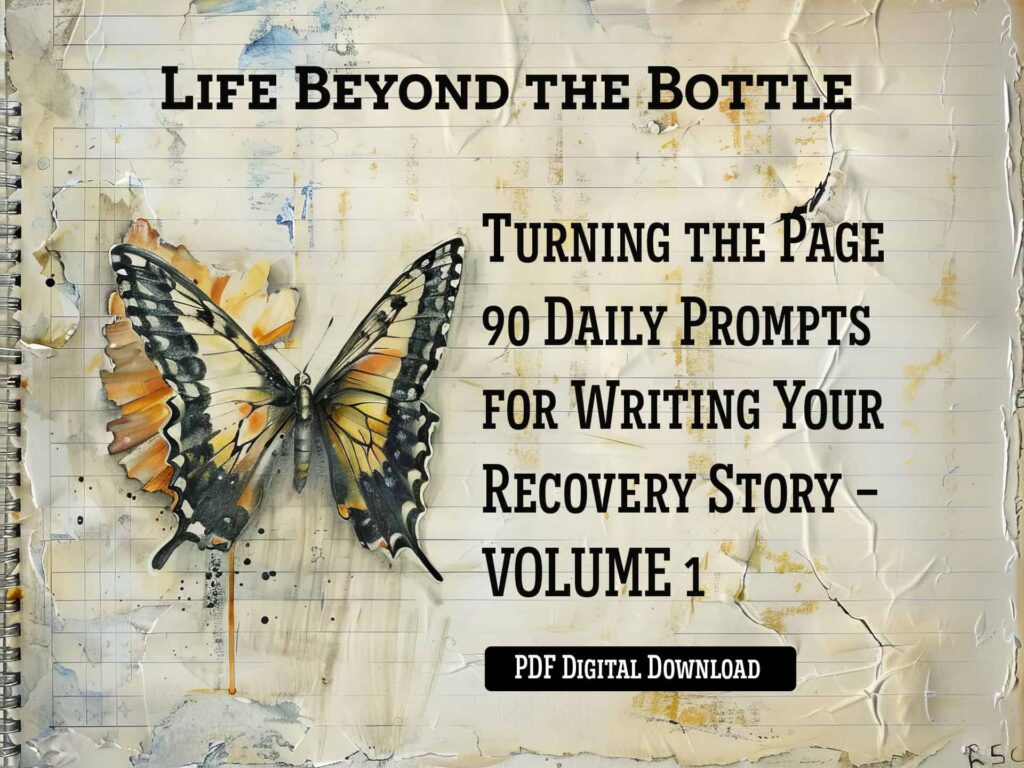
With this in mind, I’m thrilled to introduce Turning the Page: 90 Daily Prompts for Writing Your Recovery Story – Volume 1. This journal isn’t just a collection of prompts; it’s a carefully crafted companion designed to walk you through the nuances of your sobriety journey. Whether you’re at the beginning of your path to recovery or finding your way through its twists and turns, this journal is here to support your exploration of self, reflections on sobriety, and aspirations for the future.
“Turning the Page” offers a structured yet flexible framework for your thoughts and feelings, making each day an opportunity for growth and self-discovery. It’s a testament to the belief that within your story lies the power of recovery and the blueprint for a life reimagined beyond addiction. Join me as we delve into how this journal can be a pivotal part of your journey, inviting introspection, resilience, and transformation.
The Benefits of Journaling in Recovery
In the landscape of recovery, where emotions run deep, and the path ahead can seem daunting, journaling emerges as a beacon of light. It’s more than just writing; it’s a journey inward, a way to untangle thoughts, reflect on progress, and envision a future free from addiction. Here are the profound benefits journaling offers on this journey:
Emotional Processing: Putting pen to paper allows you to express emotions raw and unfiltered, facilitating a deeper understanding and processing of feelings.
Stress Reduction: Journaling can be a stress-relief tool, offering a private space to release and work through the anxieties and stresses of daily life and recovery.
Enhanced Self-Awareness: Regular writing encourages you to confront your thoughts and behaviors, promoting heightened self-awareness and mindfulness.
Clarification of Thoughts and Goals: As you write, your future goals and aspirations can become clearer, helping to guide your recovery journey toward those objectives.
Strengthened Recovery Resilience: Documenting your struggles and successes creates a record of your resilience, reminding you of your strength and ability to overcome challenges.
As we delve deeper into the structure and purpose of “Turning the Page,” remember that this journal stands as a testament to the power of writing in the recovery process. It’s not just about recounting your day; it’s about discovering yourself and laying the groundwork for a future where sobriety and self-knowledge lead the way.
Introducing the Journal
Diving into Turning the Page: 90 Daily Prompts for Writing Your Recovery Story – Volume 1 means embarking on a journey of self-exploration and healing that’s both reflective and forward-looking. This journal stands out as a unique tool tailored for individuals in recovery, providing a structured yet profoundly personal approach to journaling. Here’s what makes it an essential companion in your recovery toolkit:
Diverse Range of Prompts: With 90 carefully crafted prompts, this journal covers a wide array of themes relevant to your recovery journey—from grappling with challenges to celebrating victories; each prompt is designed to spark deep reflection and growth.
Flexible Daily Practice: The beauty of “Turning the Page” lies in its flexibility. Each prompt operates independently, allowing you the freedom to explore your recovery as it unfolds day by day, moment by moment.
Daily Check-In Sheet: Accompanying each prompt is a daily check-in sheet, a simple yet powerful tool for pausing and reflecting on your day. It encourages you to note successes, challenges, and emotions, fostering a habit of mindfulness and self-awareness.
Supports Emotional Health: Journaling is not just an exercise in writing; it’s an act of self-care. These prompts are designed to guide you through exploring your emotional landscape, offering insights into managing feelings more effectively.
Enhances Self-Reflection: “Turning the Page” encourages you to delve into your identity, aspirations, and the transformative journey of recovery. It’s about understanding who you are beneath the surface and who you aspire to be.
Strengthens Coping Strategies: As you reflect on your responses to the prompts, you’ll begin to identify and refine your coping mechanisms, making your journey through recovery more resilient and adaptive.
Celebrates Milestones: Recognizing and celebrating your achievements is crucial in recovery. This journal helps you acknowledge these milestones, reinforcing your motivation and commitment to sobriety.
Turning the Page: 90 Daily Prompts for Writing Your Recovery Story – Volume 1 is more than a journal; it’s a pathway to discovering the depths of your strength and resilience. As we move forward, we’ll see how this reflective practice can support and enhance your journey toward recovery, one day, one prompt at a time.
How ‘Turning the Page’ Supports Your Recovery Journey
Turning the Page: 90 Daily Prompts for Writing Your Recovery Story – Volume 1 is more than a collection of writing prompts; it’s a carefully designed ally in your recovery journey. Each prompt is a gentle nudge towards deeper self-awareness, emotional resilience, and personal growth. Here’s how this journaling practice can profoundly support your path to recovery:
Acknowledging Your Strengths: Recovery requires recognizing your inner strength and resilience. This journal helps reinforce your confidence and self-belief through prompts that encourage you to reflect on your capabilities and achievements.
Confronting Challenges Head-on: The journey to sobriety is filled with obstacles. “Turning the Page” provides a space to address these challenges openly, allowing you to process and strategize ways to overcome them, reinforcing your coping skills with each entry.
Navigating Emotional Complexity: Recovery is an emotional rollercoaster. The journal’s diverse prompts guide you through exploring your feelings, offering a therapeutic outlet for expressing and understanding your emotional landscape better.
Crafting a Vision for the Future: Sobriety is not just about leaving something behind; it’s about moving towards a brighter future. “Turning the Page” helps you align your recovery efforts with your aspirations by encouraging you to envision and articulate your goals.
Fostering Daily Reflection and Mindfulness: Including a daily check-in sheet alongside each prompt is a powerful tool for mindfulness. It invites you to pause and reflect on your day, creating a routine that promotes presence and attentiveness to your journey.
Celebrating Every Step: Recovery is made up of big and small milestones. This journal helps you document and celebrate each victory, reinforcing the positive momentum in your journey toward sobriety.
“Turning the Page” is more than just a tool for reflection; it’s a guide for transformation in recovery. As you engage with each prompt, you’re not merely writing down words—you’re weaving the narrative of your recovery, one day at a time. This practice of daily journaling becomes a cornerstone of your recovery, offering insights, encouragement, and a tangible sense of progress.
As we wrap up this exploration of “Turning the Page,” let’s remember the power of storytelling in our recovery and the profound impact of penning our own stories on this journey of healing and growth.
Embark on Your Reflective Journey Today
The act of writing in Turning the Page: 90 Daily Prompts for Writing Your Recovery Story – Volume 1 is more than just a practice of putting pen to paper; it’s an invitation to engage deeply with your own story of recovery, offering a daily opportunity for reflection, growth, and healing. As you turn each page and respond to each prompt, you’re documenting your journey and actively participating in your own process of healing and self-discovery.
Here’s why starting this reflective journey today can be a transformative step in your recovery:
Personal Empowerment: Each prompt empowers you to take ownership of your recovery story, recognizing your agency and strength in navigating the path to sobriety.
Enhanced Clarity and Focus: Regular journaling helps clarify your thoughts and emotions, providing a focused lens through which to view your recovery journey and your progress.
A Testament to Your Journey: Your filled journal will stand as a testament to your resilience and dedication to recovery, serving as a tangible reminder of how far you’ve come and the obstacles you’ve overcome.
Building a Supportive Habit: The discipline of daily journaling fosters a supportive habit, contributing to a routine that reinforces your commitment to recovery and personal well-being.
“Turning the Page” is more than a journal; it’s a companion on your road to recovery, a tool designed to illuminate the complexities and celebrate the triumphs of your journey. As you embark on this reflective practice, you’re not just recounting the days; you’re crafting a narrative of transformation and hope, page by page.
Begin your journey today. Let Turning the Page: 90 Daily Prompts for Writing Your Recovery Story—Volume 1 guide you through the reflective recovery process, helping you chart a course toward a future filled with insight, resilience, and sobriety. Every entry is a step forward, every reflection a beacon of progress on your path to a brighter, sober future.
Conclusion
In addiction recovery, where every individual’s journey is as unique as their fingerprint, finding tools that resonate with your story is crucial. Turning the Page: 90 Daily Prompts for Writing Your Recovery Story – Volume 1 is more than just a journal; it’s a scaffold for building a deeper connection with yourself, a mirror reflecting your innermost thoughts, challenges, and triumphs on the road to sobriety.
As we conclude our exploration of this powerful journaling tool, remember:
Your Story Matters: Journaling every day affirms your journey, struggles, and victories. Writing becomes an act of self-honor and acknowledgment of your resilience.
Insight and Growth: The insights you gain through daily prompts are invaluable. They aid in navigating the present and sculpting a future where sobriety and personal fulfillment are intertwined.
A Daily Practice of Recovery: Incorporating “Turning the Page” into your daily routine reinforces the commitment to your recovery, making each day a purposeful stride towards healing and self-discovery.
“Turning the Page” invites you to engage in a practice that is both therapeutic and transformative, offering a structured yet personal space for reflection. As you pen down your thoughts and navigate through the prompts, you are laying the bricks on your path to recovery, one word at a time.
Begin today. Let each prompt guide you through your recovery, weaving together the threads of your experiences, emotions, and hopes into a narrative of strength and sobriety. Embrace the opportunity to turn the page on your past and write a new story filled with growth, understanding, and a bright future with the promise of a sober life.
Embarking on the journey of addiction recovery is an incredibly personal and profound process, one that requires not just external support but deep internal reflection and understanding.
Central to this inner journey is the concept of self-awareness—a powerful tool that offers insight into our emotions, behaviors, and the triggers that may lead us astray. This article explores the essence of self-awareness, its differentiation from self-reflection, and practical ways to weave this critical skill into the fabric of recovery. Here are the essential takeaways to carry with you:
Understanding Self-Awareness: Self-awareness is the conscious recognition of your feelings, motivations, and behaviors. It’s the ability to see yourself clearly at the moment, offering a foundation for change and growth.
Distinguishing From Self-Reflection: While self-awareness focuses on the present, self-reflection involves looking back. Both are crucial for recovery, serving different but complementary roles in personal development.
The Role of Self-Awareness in Recovery: It’s instrumental in identifying triggers, making conscious choices, enhancing emotional intelligence, and facilitating personal growth—all key elements in overcoming addiction.
Integrating Self-Awareness into Recovery: Through mindfulness, journaling, therapy, and developing healthy routines, you can enhance your self-awareness. This ongoing practice helps navigate recovery with intention and insight.
As you integrate these insights into your recovery journey, remember that self-awareness is both a goal and a guide. It illuminates the path to sobriety and self-discovery, offering clarity and direction when you need it most.
The journey of recovery, grounded in self-awareness, is a path of constant learning and growth. It’s about discovering your strengths, confronting challenges, and making choices that align with your deepest values and aspirations. With self-awareness as your compass, you’re empowered to navigate this journey with confidence, resilience, and hope for the future. Here’s to your continued journey towards a life of sobriety, enriched by a profound understanding of who you are and all that you can become.
Introduction
At the heart of any successful recovery from addiction lies a profound understanding of oneself. Self-awareness, the ability to recognize and understand your emotions, behaviors, and motivations, is more than just a psychological concept; it’s a fundamental tool in the journey toward sobriety.
While the path out of addiction is often paved with various therapies, support systems, and coping strategies, the role of self-awareness stands out for its ability to empower individuals to take control of their recovery process.
This article delves into the essence of self-awareness in addiction recovery. We’ll explore what self-awareness truly means, how it differs from the reflective practice of self-reflection, and, importantly, how you can integrate self-awareness into your recovery program.
Understanding the dynamics of self-awareness offers a beacon of hope, illuminating the steps toward overcoming addiction and building a life of depth, meaning, and resilience.
What is Self-Awareness?
Self-awareness is a key to personal growth and a critical element in successfully navigating recovery from addiction. It means clearly understanding your personality, including your emotions, desires, motivations, and the way these aspects influence your behavior. At its essence, self-awareness allows you to see yourself with clarity, to grasp how others see you, and how you interact with the world.
Emotional Awareness: This is about recognizing your emotions, understanding where they come from, and seeing how they affect your thoughts and actions. It’s essential in recovery, where certain emotions might push you toward substance use.
Self-Assessment: Being able to look at yourself honestly and identify what you’re good at and where you might need some work. In the recovery journey, knowing this can help you use your strengths to your advantage and tackle your weaker spots.
Conscious Decision-Making: When self-aware, you make choices deliberately, not just out of habit or impulse. This means choosing paths that align you with your recovery goals and deeper values.
Understanding Impact: It’s also about seeing the ripple effect of your actions on yourself and those around you. This insight can lead to more thoughtful and positive interactions.
Building self-awareness isn’t a one-time task but a continuous journey that can be both tough and incredibly rewarding. It involves stripping away layers of denial, facing truths that might be uncomfortable, and gaining a more profound knowledge of who you are. In addiction recovery, self-awareness is the foundation for true and lasting change, offering the insights necessary to break free from old cycles and rebuild a life that genuinely reflects who you are.
Self-Awareness vs. Self-Reflection
While self-awareness and self-reflection are closely related concepts, understanding their differences is crucial in the recovery journey. Both play vital roles in personal growth but engage different aspects of our consciousness and serve distinct purposes.
Self-awareness is about being tuned in to your current state of being. It’s recognizing your emotions, thoughts, and behaviors as they happen. This immediate awareness allows you to understand your feelings, why you might feel a certain way, and how your emotions influence your actions in real-time.
Self-reflection, on the other hand, is the process of looking back at your actions, thoughts, and feelings. It involves analyzing past behaviors to understand the motivations behind them and the consequences they’ve produced. Self-reflection often leads to insights that can inform future decisions and behaviors.
Key Differences:
Timing: Self-awareness occurs now, while self-reflection happens after the fact.
Focus: Self-awareness focuses on current experiences and states of being. Self-reflection analyzes past actions and their outcomes.
Purpose: Self-awareness helps you navigate present situations more effectively, allowing for better decision-making. Self-reflection provides insight into past behaviors, offering lessons for future improvement.
Integrating Both in Recovery: Integrating self-awareness and self-reflection into your recovery process can amplify your ability to make positive changes. Being aware in the moment helps you catch and potentially alter automatic behaviors or thoughts that may lead to substance use. Reflecting on those moments later adds depth to your understanding, helping you identify patterns and areas for growth.
By balancing the immediate insights of self-awareness with the deeper analysis provided by self-reflection, you create a powerful toolset for navigating recovery. This dual approach offers a more straightforward path toward understanding yourself, making conscious choices, and ultimately building a life aligned with your values and goals.
The Importance of Self-Awareness in Addiction Recovery
Self-awareness is not just beneficial in recovery; it’s essential. It serves as the foundation for the entire recovery process, offering a starting point for genuine change and healing. Here’s why self-awareness holds such significance in the journey towards sobriety:
Recognizing Triggers and Patterns: Self-awareness allows you to identify the specific triggers that might lead to substance use. By understanding your emotional and behavioral responses to these triggers, you can develop strategies to cope with them more effectively.
Making Conscious Choices: With heightened self-awareness, you’re better equipped to make choices supporting your recovery goals. This deliberate decision-making process is crucial for avoiding relapse and maintaining sobriety.
Enhancing Emotional Intelligence: Self-awareness is vital to understanding your emotions and how you relate to others. This emotional intelligence can improve relationships, reduce conflicts, and foster a supportive network—elements that are vital for recovery.
Facilitating Personal Growth: As you become more self-aware, you’ll gain insights into your values, strengths, and areas for improvement. This knowledge is invaluable for setting goals and pursuing personal development beyond addiction recovery.
The journey of recovery is as much about rediscovering who you are as it is about abstaining from substances. Self-awareness lights the way, helping you navigate the complex emotions and challenges of recovery. By investing time and effort into developing self-awareness, you’re not just working towards sobriety; you’re building the foundation for a richer, more fulfilling life.
Integrating Self-Awareness into Alcohol Addiction Recovery
Incorporating self-awareness into your recovery process is a proactive step towards lasting change. It’s about turning inward to understand your thoughts, emotions, and behaviors deeply and using that understanding to guide your actions and decisions. Here’s how you can effectively integrate self-awareness into your recovery journey:
Mindfulness and Meditation:
Practice Mindfulness: Engage in mindfulness exercises daily. Focus on being present and fully experiencing each moment without judgment. This can help you become more aware of your emotional states and triggers.
Meditate Regularly: Meditation can quiet the mind and enhance your ability to observe your thoughts and feelings without reacting automatically. It strengthens the mental clarity needed for self-awareness.
Journaling for Insight:
Keep a Recovery Journal: Write about your daily experiences, feelings, and thoughts. Reflect on your entries to identify patterns and triggers. This can be a powerful tool for enhancing self-awareness and understanding your journey.
Reflect on Progress: Use your journal to track your progress and growth. Recognize and celebrate your achievements, no matter how small, as they contribute to your recovery.
Seeking and Accepting Feedback:
Openness to Feedback: Actively seek feedback from those you trust. Listening to how others perceive your actions and behaviors can provide valuable insights and help you see aspects of yourself you might overlook.
Constructive Use of Feedback: Reflect on the feedback without defensiveness. Consider how it aligns with your perceptions and how you can use it to foster growth and change.
Therapeutic Support:
Engage in Therapy: Work with a therapist who can guide you through self-discovery. Therapy can offer new perspectives and coping strategies, deepening self-awareness and supporting recovery.
Explore Different Modalities: Consider therapies emphasizing self-awareness, such as Cognitive Behavioral Therapy (CBT) or Dialectical Behavior Therapy (DBT), which provide tools for understanding and changing thought and behavior patterns.
Developing Healthy Routines:
Establish Routines That Foster Awareness: Incorporate activities into your daily routine that enhance self-awareness, such as yoga, reflective reading, or spending time in nature.
Prioritize Physical Health: Physical well-being significantly impacts mental health. Regular exercise, a nutritious diet, and adequate sleep all support heightened self-awareness.
Embracing Change and Growth:
Commit to Continuous Learning: View recovery as a continuous learning and growth journey. Embrace your changes as you become more self-aware, understanding that each insight brings you closer to the person you aspire to be.
Cultivate Patience and Compassion: Recognize that developing self-awareness is ongoing. Be patient and compassionate with yourself as you navigate this journey.
Integrating self-awareness into your recovery isn’t a one-size-fits-all process. It requires dedication, patience, and a willingness to confront and grow from challenges. By making self-awareness a cornerstone of your recovery, you empower yourself to make choices that align with your true values and goals, paving the way for a fulfilling and sober life.
Conclusion
Self-awareness is a transformative tool that lights the path to deeper understanding, healing, and lasting change. Through the journey of recovery, cultivating self-awareness allows you to navigate the complexities of your emotions, behaviors, and triggers with a clarity that can truly break the chains of addiction.
Integrating self-awareness into your recovery isn’t just about avoiding negative behaviors or substances; it’s about actively shaping a life that resonates with your true self. It’s about making informed, conscious choices reflecting your values, aspirations, and the profound insights you’ve gained about who you are and wish to become.
As you move forward, remember that the journey of self-awareness is ongoing. It unfolds in every moment of mindfulness, every journal entry, every piece of feedback, and every therapeutic discovery. This journey may challenge you but will also empower you, offering rewards far beyond recovery. You’re not only working towards sobriety but also towards a richer, more authentic life.
So, as you continue on your path, let self-awareness be your guide. Embrace its power to illuminate the way, knowing that each step taken with awareness is a step towards a future filled with possibility, growth, and true freedom from addiction. The journey to recovery is inward, and with self-awareness as your compass, there’s no limit to the heights you can reach.