
Key Takeaways: Why You Need an Addiction Recovery Maintenance Plan
As you embark on or continue your journey through recovery, understanding the pivotal role of an addiction recovery maintenance plan cannot be overstated. This section highlights the essential takeaways from our comprehensive look into why such a plan is beneficial and necessary for anyone committed to a life of sobriety. These key points serve as a beacon, guiding you through the intricacies of sustained recovery and personal growth.
- Complacency is the silent enemy of recovery, so making an active, evolving maintenance plan is critical to prevent backsliding.
- Life’s inevitable changes and stresses demand a flexible recovery strategy that adapts to new challenges without compromising sobriety.
- Recovery is an opportunity for personal growth beyond sobriety, with a maintenance plan supporting goals that profoundly enrich life.
- Dealing with triggers and cravings proactively ensures they don’t derail your progress, with strategies evolving as you do.
- Mental and emotional health are pillars of sustainable recovery, requiring ongoing attention and care within your maintenance plan.
- Redefining recovery to exclude relapse as a necessity empowers you with a mindset focused on continuous improvement and resilience.
- Your recovery needs will evolve over time, highlighting the importance of a maintenance plan that grows and adapts with you.
As we delve deeper into these critical areas, remember that the recovery journey is as unique as the individual undertaking it. The forthcoming exploration of each reason reinforces the value of a personalized maintenance plan for preventing relapse and nurturing a life filled with purpose, joy, and continuous growth. Let these insights illuminate your path as you forge ahead.
Introduction
Recovery from alcohol addiction isn’t a destination; it’s a journey—a path that twists and turns, with its ups and downs, challenges, and triumphs. Many embark on this journey with a determined “I’ve quit, and that’s it” mentality, believing the hardest part is behind them once they’ve put down the bottle. But here’s the thing: the initial victory of quitting is just the beginning.
In the quiet moments of victory, a subtle danger lurks—complacency. It whispers, “You’ve got this,” lulling you into a false sense of security. But what happens when life throws a curveball? When stress, change, or even the mundane daily grind tests your resolve? This is where the true challenge of recovery begins and where the greatest opportunities for growth and transformation lie.
Without a roadmap, it’s easy to lose your way. That’s why an addiction recovery maintenance plan isn’t just helpful; it’s essential. It’s your guidebook for navigating the complexities of life post-addiction, ensuring that you continue to move forward, even when the path gets rocky. From preventing relapse to fostering personal growth, a well-structured plan addresses the multifaceted nature of recovery in a way that ‘winging it’ never can.
As we dive into the seven reasons why you need an addiction recovery maintenance plan, consider this: recovery is not just about avoiding alcohol. It’s about rebuilding and redefining your life in recovery on your terms. Let’s explore how a maintenance plan can turn the ideal of a fulfilling, sober life into a reality.
Reason 1: Complacency in Recovery Leads to Vulnerability
When the challenges of quitting alcohol begin to fade, it’s easy to fall into the trap of complacency. You might start telling yourself, “I’ve got this. I don’t need to be so vigilant.” But complacency is the silent saboteur of recovery, subtly eroding the foundations you’ve worked hard to build. Here’s why staying proactive is non-negotiable:
- Overconfidence Can Blind You: Confidence in your recovery is crucial, but overconfidence can make you blind to the subtle signs of a potential relapse.
- Routine Can Lead to Boredom: Following the same recovery routine for too long can become monotonous, leading to a desire for change that might not always be healthy.
- Underestimating Triggers: Over time, you might start to underestimate the power of triggers, thinking you’re immune to temptations that once swayed you.
The key to avoiding the complacency trap is continuous engagement with your recovery process. A recovery maintenance plan ensures you continuously grow, learn, and adapt. It’s about ensuring your recovery evolves with you, reflecting where you are in your journey and where you aim to be. This proactive approach turns potential vulnerabilities into strengths, fortifying your commitment to sobriety.
- Stay Engaged: Regularly review and update your recovery plan to match your current challenges and goals.
- Seek New Experiences: Actively pursue new hobbies and interests that enrich your life and expand your horizons.
- Remain Connected: Stay in touch with your support network, sharing your experiences and learning from others.
In embracing a mindset of growth and adaptability, complacency doesn’t stand a chance. Your recovery maintenance plan isn’t just a safety net—it’s a springboard to a more vibrant, fulfilling life beyond addiction.
Reason 2: Changing Dynamics in Life and Stress
Life doesn’t stand still; it evolves, bringing new challenges, stressors, and unexpected turns. Whether it’s a job change, relationship dynamics, or even global events, life’s inherent unpredictability can test the resilience of your sobriety. Understanding and preparing for these shifts is crucial:
- Unexpected Stress: Sudden or unanticipated stress can trigger the urge to seek comfort in old habits.
- Life Milestones: Positive changes, like a new job or relationship, can also bring stress and test your coping mechanisms.
- Daily Hassles: Even routine daily stressors can accumulate, leading to increased vulnerability to relapse.
A dynamic recovery maintenance plan acts as your anchor amid life’s turbulence. It’s designed not only to help you withstand the storms but also to navigate through them successfully:
- Flexible Coping Strategies: Equip yourself with various coping mechanisms to handle different types of stress.
- Proactive Planning: Anticipate potential stressors and have a plan in place for dealing with them before they occur.
- Stress Management Techniques: Incorporate practices such as mindfulness, exercise, or meditation into your routine to manage stress levels effectively.
Adapting your recovery plan to the changing dynamics of life ensures that you’re always prepared, no matter what comes your way. It acknowledges that as your life changes, so too do the challenges you face and the strategies you’ll need to maintain your sobriety. By staying one step ahead, you transform potential obstacles into opportunities for growth, strengthening your recovery with every new experience.
- Embrace Change: View changes and challenges as opportunities to strengthen your recovery.
- Continuous Learning: Be open to learning new ways to manage stress and navigate life’s changes.
- Support System: Lean on your support network during times of change for advice, encouragement, and a listening ear.
In essence, a recovery maintenance plan that adapts to life’s ebb and flow is not just about sustaining sobriety; it’s about thriving in the face of life’s inevitable changes and stressors.
Reason 3: Growth Beyond Sobriety

Achieving sobriety is an immense milestone, but true recovery encompasses much more than the absence of alcohol in your life. It’s about seizing the opportunity to grow, evolve, and transform into the best version of yourself. Sobriety is the foundation upon which you can build a life filled with purpose, joy, and fulfillment. Here’s how growth extends beyond mere sobriety:
- Self-Discovery: Sobriety opens the door to exploring who you are without alcohol, revealing new interests, passions, and talents.
- Improved Relationships: You can forge more profound, meaningful connections with loved ones with clarity and presence.
- Personal Development: Sobriety allows you to set and pursue goals that were once overshadowed by addiction.
A robust recovery maintenance plan nurtures this growth by encouraging you to:
- Set New Goals: Continuously set new personal, professional, and spiritual goals to strive for.
- Explore New Interests: Sobriety gives you the time and energy to explore new hobbies and activities that enrich your life.
- Invest in Relationships: Actively work on strengthening relationships with family and friends, repairing any bridges that may have been damaged by addiction.
Embracing growth beyond sobriety means recognizing that recovery is a journey of constant self-improvement and exploration. Your maintenance plan should reflect your aspirations and support your personal development at every step.
- Reflect on Progress: Regularly take stock of how far you’ve come and where you’d like to go next in your recovery journey.
- Embrace Challenges: View challenges as opportunities to learn and grow rather than obstacles to your recovery.
- Celebrate Achievements: Recognize and celebrate your big and small achievements as milestones in your growth journey.
Growth beyond sobriety enriches your life in ways you might never have imagined while under the influence of alcohol. A recovery maintenance plan focusing on personal development ensures that your journey toward a fulfilling life is always moving forward, never stagnant.
Reason 4: Dealing with Triggers and Cravings
Even years into recovery, triggers and cravings can emerge, sometimes unexpectedly, posing a challenge to your sobriety. These triggers can be emotional, environmental, or social, and understanding how to manage them is crucial for maintaining long-term recovery. Here’s why dealing with triggers and cravings is a vital component of your recovery maintenance plan:
- Emotional Triggers: Stress, anxiety, or even happiness can trigger cravings, reminding you of past alcohol use as a coping mechanism.
- Environmental Triggers: Certain places, smells, or sights can evoke memories associated with drinking.
- Social Triggers: Social situations, especially those where alcohol is present, can prompt strong urges to partake.
A thoughtfully prepared recovery maintenance plan equips you with strategies to handle these triggers and cravings effectively:
- Identify and Avoid Triggers: Learn to recognize your personal triggers and, where possible, avoid them or prepare strategies to cope with them.
- Develop Healthy Coping Mechanisms: Replace old habits with healthy alternatives, such as exercise, hobbies, or socializing in sober environments.
- Utilize Mindfulness Techniques: Practice mindfulness and meditation to stay present and reduce the impact of cravings.
Incorporating these strategies into your daily life helps ensure that when triggers and cravings do arise, you’re ready to face them head-on:
- Seek Support: Don’t hesitate to lean on your support network when feeling vulnerable to triggers or cravings.
- Stay Flexible: Be willing to adapt your strategies as you learn what works best for you in different situations.
- Reflect and Learn: After encountering a trigger, take time to reflect on the experience and how you can handle it better in the future.
Dealing with triggers and cravings is an ongoing process, and it’s essential to remember that experiencing them is a normal part of recovery. By having a comprehensive recovery maintenance plan, you’re not just reacting to these challenges but proactively preparing for them, ensuring they don’t derail your journey to a healthier, happier life.
Reason 5: Maintaining Mental and Emotional Health
Sobriety is as much about mental and emotional wellness as it is about physical abstinence from alcohol. Recovery unveils the depth of how closely intertwined our mental health is with our addiction. Often, substances were used as a makeshift solution to cope with underlying issues such as depression, anxiety, or trauma. Here’s why prioritizing your mental and emotional health is a cornerstone of a robust recovery maintenance plan:
- Unaddressed Mental Health Issues Can Lead to Relapse: Ignoring mental health can create an environment where turning back to alcohol seems like a viable option.
- Emotional Wellness Enhances Quality of Life: Good mental health fosters resilience, improves relationships, and contributes to overall satisfaction with life.
- Recovery Can Uncover New or Exacerbated Mental Health Challenges: As you navigate sobriety, you may encounter mental health challenges that were previously masked by alcohol use.
Implementing strategies for maintaining mental and emotional health into your recovery plan can significantly impact your journey:
- Seek Professional Support: Engage with therapists, counselors, or support groups tailored to recovery and mental health.
- Develop Healthy Emotional Coping Skills: Cultivate skills like emotional regulation, distress tolerance, and effective communication to manage life’s ups and downs without resorting to alcohol.
- Incorporate Mindfulness and Relaxation Techniques: Regular practice of mindfulness, meditation, or yoga can improve mental health and reduce stress and anxiety.
Your recovery maintenance plan should be a living document that adapts to include strategies and supports for maintaining your mental and emotional health:
- Routine Mental Health Check-Ins: Regularly assess your mental health to identify and address any emerging issues promptly.
- Balance Is Key: Strive for a balanced lifestyle that includes time for work, relationships, personal growth, and relaxation.
- Celebrate Emotional Milestones: Acknowledge and celebrate moments of emotional insight, resilience, and growth just as you would sobriety milestones.
In essence, maintaining mental and emotional health is not just about preventing relapse; it’s about building a life where you thrive. Your recovery maintenance plan serves as a blueprint for that life, guiding you through the complexities of sobriety with a focus on holistic wellness.
Reason 6: Relapse No Longer Has to Be Part of Your Journey

The notion that relapse is an inevitable step in the recovery process is outdated and disempowering. While it’s true that many individuals experience relapse during their journey, embracing the belief that you’re destined to relapse at some point can undermine your efforts and commitment to sustained sobriety. Here’s why your recovery maintenance plan can change the narrative:
- Shifts the Focus to Prevention: Recognizing that relapse is not a foregone conclusion shifts the emphasis from recovery as a cycle of relapse and returns to a path of continuous growth and strengthening.
- Empowers You With Tools and Strategies: Equipping yourself with a comprehensive set of strategies for dealing with stress, triggers, and cravings empowers you to navigate challenges without falling back into old patterns.
- Builds Confidence in Your Ability to Maintain Sobriety: Knowing you have a plan and the resources to support your recovery builds self-efficacy and confidence in your ability to stay sober.
Incorporating a mindset and strategies focused on preventing relapse into your maintenance plan fortifies your journey:
- Proactive Planning: Instead of reacting to challenges, anticipate and plan for them. This might include identifying potential high-risk situations and having a strategy for handling them.
- Continuous Self-Reflection: Regularly assess your emotional and mental state, environment, and relationships to identify areas needing attention or adjustment.
- Engagement in Recovery Activities: Stay engaged with recovery meetings, therapy, or other supportive activities reinforcing your sobriety commitment.
By reimagining recovery as a journey where relapse isn’t an expected pit stop, you reclaim power over your path:
- Celebrate Continuous Sobriety: Acknowledge and celebrate the time you’ve spent in recovery, recognizing it as a testament to your strength and resilience.
- Reinforce Your Support Network: Regularly connect with your support network, sharing successes and challenges and reinforcing the mutual commitment to a sober lifestyle.
- Adjust and Adapt: Be willing to adjust your recovery plan as you grow and your needs change, ensuring it always aligns with your sobriety and personal development goals.
Relapse doesn’t have to be part of your recovery journey. With a comprehensive recovery maintenance plan in place, you’re not just avoiding relapse; you’re actively building a life where sobriety is sustained through conscious choice, support, and personal growth.
Reason 7: Your Recovery Needs Evolve Over Time

As you journey through recovery, your needs, challenges, and the very landscape of your life will inevitably change. The person you are today differs from the one who took those first steps toward sobriety. Your recovery process must be dynamic, evolving alongside you to reflect your current reality, aspirations, and growth. Here’s why adapting your recovery maintenance plan over time is essential:
- Personal Growth Changes Needs: As you grow and change, what you need from your recovery plan will also shift. Early recovery might focus more on resisting cravings, while later stages may emphasize personal development and dealing with life’s complexities without relapse.
- New Challenges Emerge: Different stages of life bring new challenges, from career changes and relationships to aging and health issues. Your recovery plan needs to address these evolving challenges to remain effective.
- Maturity Brings Different Perspectives: Over time, your understanding of yourself and your recovery deepens. This maturity can lead to new insights and approaches to maintaining your sobriety.
Ensuring your recovery maintenance plan evolves with you involves:
- Regular Review and Update Sessions: Set aside time to review your recovery plan regularly, assessing what’s working, what isn’t, and what needs have emerged since your last review.
- Incorporate New Goals: As your interests, capabilities, and circumstances change, update your goals to reflect your current aspirations and the steps needed to achieve them.
- Stay Informed: Keep abreast of new research, tools, and techniques in recovery and consider how these might be integrated into your plan.
Embracing the evolution of your recovery journey means recognizing that change is not only inevitable but beneficial:
- Flexibility is Key: Allow yourself the flexibility to try new strategies, discard what doesn’t work, and refine what does.
- Growth Mindset: View your recovery as a continuous process of learning, growth, and development, where challenges are opportunities for further progress.
- Supportive Community Engagement: Engage with your support network and recovery community to share experiences and insights, which can inspire adjustments and enhancements to your plan.
Your recovery is a living, breathing process that should grow and change as you do. By ensuring your recovery maintenance plan is as dynamic as you are, you pave the way for a recovery that’s not just about surviving but thriving in the ever-changing landscape of your life.
The Life Beyond the Bottle Refresh and Renew 21-Day Recovery Maintenance Plan
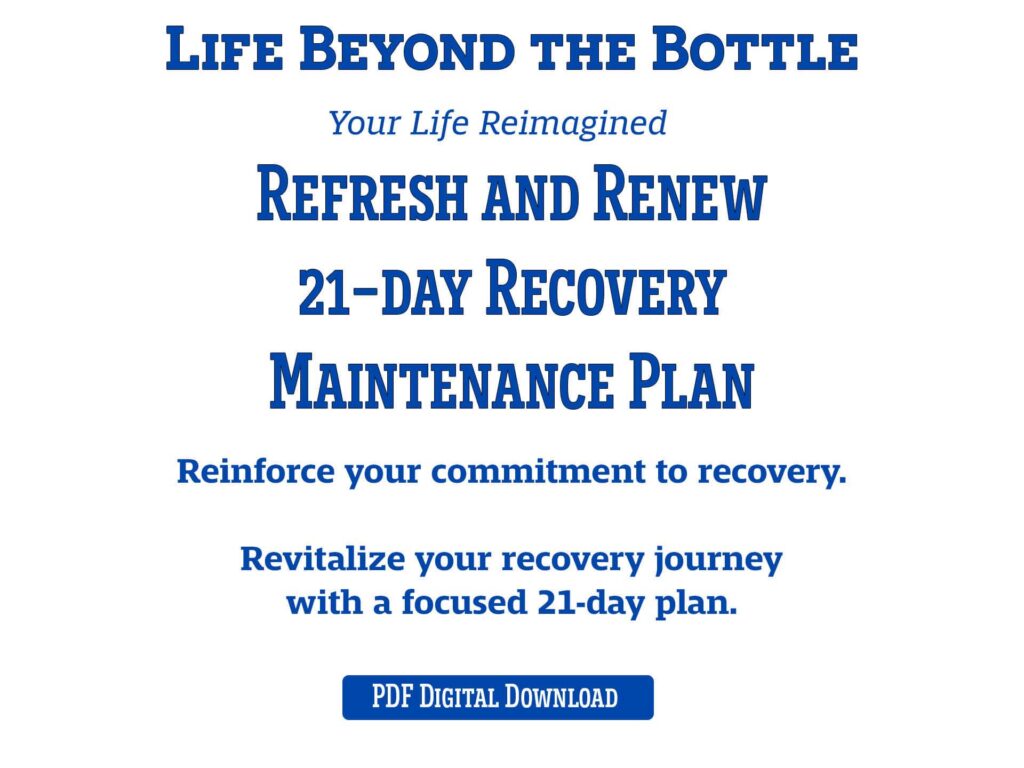
After exploring the multifaceted reasons why an adaptive, evolving recovery maintenance plan is indispensable, it’s clear that having a structured yet flexible guide can significantly impact your journey toward lasting sobriety and personal growth. This is where the Life Beyond the Bottle Refresh and Renew 21-Day Recovery Maintenance Plan comes into play—a program designed to reinforce your sobriety while encouraging continual self-discovery and development.
The Refresh and Renew Plan is for those seeking to maintain their recovery and enrich and invigorate their life beyond the bottle. Here’s what makes this plan an essential companion in your journey:
- Structured Flexibility: Tailored to meet you where you are in your recovery, the plan offers the perfect balance between structure and the flexibility needed to accommodate your unique path and pace.
- Comprehensive Approach: Covering everything from dealing with triggers and cravings to nurturing your mental and emotional health, the plan provides a holistic approach to recovery maintenance.
- Empowering Tools and Activities: The plan is packed with practical exercises and actionable strategies designed to empower you to take proactive steps towards a fulfilling life in sobriety.
The Refresh and Renew 21-Day Recovery Maintenance Plan is invaluable for renewing your commitment to sobriety and rekindling your passion for a vibrant, fulfilling life.
- Jumpstart Your Growth: Use the plan as a catalyst to ignite or rekindle your personal and spiritual growth journey.
- Reinforce Your Foundation: Solidify the coping mechanisms and strategies that keep you grounded and focused on your sobriety.
- Explore New Horizons: Be inspired to explore new aspects of yourself, unlocking potentials and passions that lay dormant or undiscovered.
Embarking on the Refresh and Renew 21-Day Recovery Maintenance Plan is more than just a commitment to avoiding relapse; it’s a declaration of your dedication to living a life defined not by the shadows of addiction but by the light of recovery and renewal. Let this plan guide you as you navigate the complexities of maintaining sobriety and embracing the journey of continuous growth and transformation.
Conclusion
Embarking on the journey of recovery from alcohol addiction is among the most courageous steps one can take toward reclaiming one’s life. Yet, as we’ve explored, the path to sustained sobriety extends far beyond the initial act of putting down the bottle. It’s a continuous journey of growth, learning, and adaptation that demands more than sheer willpower; it requires a plan.
The seven reasons outlined above underscore the importance of an addiction recovery maintenance plan in navigating the ever-evolving landscape of recovery. From combating complacency and managing life’s stressors to fostering personal growth and facing triggers head-on, a well-structured plan equips you with the tools necessary to maintain sobriety through life’s highs and lows. More importantly, it offers a blueprint for a life where relapse doesn’t have to be part of your story—a life where your recovery needs evolve alongside you, ensuring that every step forward is grounded in self-awareness, resilience, and hope.
The Life Beyond the Bottle Refresh and Renew 21-Day Recovery Maintenance Plan is not just another tool; it’s a testament to the belief that recovery is a vibrant journey of self-discovery and renewal. By engaging with this plan, you’re not merely navigating the challenges of recovery; you’re embracing the opportunity to redefine your life on your terms with clarity, purpose, and joy.
As you progress in your journey, remember that recovery is not a linear process but a rich tapestry of experiences that shape who you are and aspire to be. The path may be fraught with challenges, but with the right plan, each step forward is towards a brighter, sober future. Let the Refresh and Renew Plan be your guide, companion, and inspiration as you build a life beyond the bottle filled with endless possibilities and unwavering hope.